
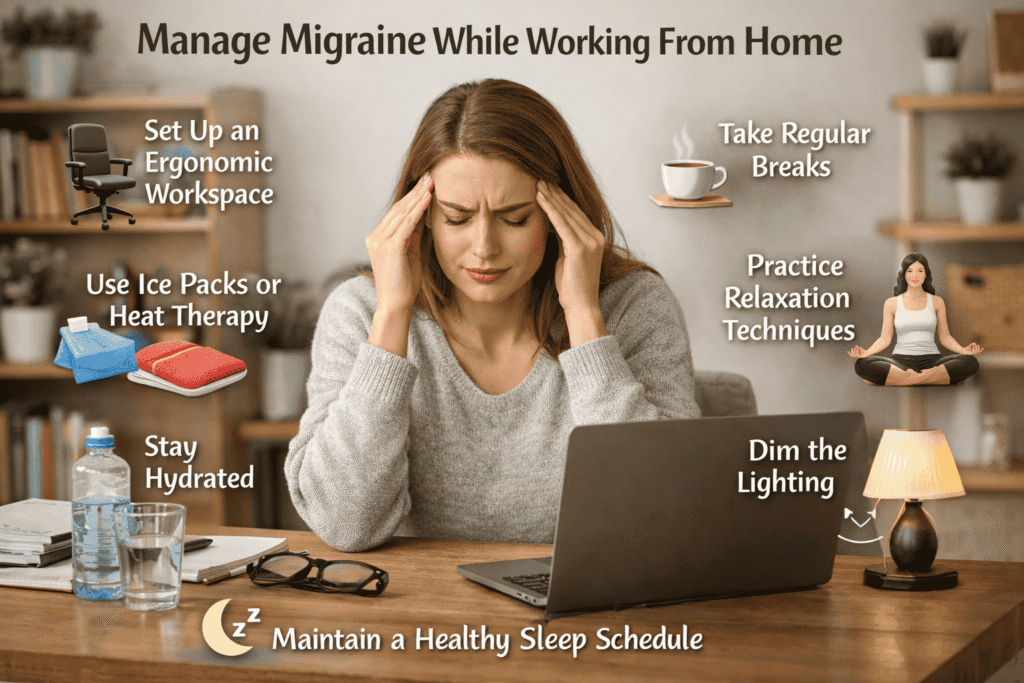
Work from Home with Migraine – How to Limit flares
Working remotely is a great way to reduce triggers and manage episodes when you suffer from migraine.
It can be difficult to perform your job when you suffer from migraine. People with migraines report being 46 less productive at work during a migraine. Finding remote work you can do in the comfort of your home will help you keep up with your job.
Lindsey de los Santos, a migraine sufferer herself, is an excellent example of the impact that working from home can have on migraine treatment. She taught in classrooms for 24 years, before moving to her current position as advocacy and program director at the American Migraine Foundation. This position offers her the opportunity to work from home. She can manage chronic migraines more effectively.
Lindsey said to Healthline, “I have the best circumstances that I could ever ask for.” “[The job] is almost completely remote. The only travel is a short distance, but I can work from home where I have complete control over my environment, and can take medications when needed.
Lindsey talked with Healthline about her challenges in the classroom, and how working at home has helped to manage migraines.
A work environment that triggers migraines
Lindsey had to deal with many migraines while she was a teacher.
She told Healthline that her migraine attacks became more severe and frequent as she progressed through her teaching career. The classroom structure was not conducive to a migraine-friendly atmosphere. The harsh lighting, loud assembly, and other triggers that I could not control became debilitating.
Lindsey also had to find a migraine regimen that was effective for her. It wasn’t always feasible to leave the classroom in order to treat a migraine.
Many people in offices, schools, warehouses and other work settings have similar challenges. A 2022 review found that the majority of migraine-related productivity losses at work are due to presenteeism. Many migraine sufferers show up for work, but are unable to complete their tasks or focus on the task at hand.
accommodations may be provided by an employer in order to modify your workspace, schedule or tasks. This can help reduce migraine symptoms and triggers at work. Researchers have found that stigma associated with migraine prevents many from disclosing their condition at work. Even if you are able to secure accommodations, they may not be enough to manage your condition.
Lindsey decided that a new job was necessary.
Working from Home
Lindsey retired as a teacher and started a new career, working remotely for AMF. She was a volunteer for the organization, and the job fit her perfectly.
She created a home office that was migraine-friendly to minimize symptoms as she worked.
“I have an office in a small corner of my home.” “I’ve set myself up so that I can have natural light when I want it, or softer, migraine-friendly light if that is what I need,” she said.
It is a quiet space, free from strong smells that can trigger her migraine symptoms.
She uses a space-heater to regulate temperature. This helps her keep migraine symptoms under control.
Lindsey explained, “I can take a short break to drink water, take snacks or medication.” “I have always had a [migraine-management] kit in my class, but it is easier to treat at home, because I can do so if necessary and continue with my work.”
Support
Lindsey has noticed a difference in her ability to deal with chronic migraines while at work thanks to the support of those around her.
It’s great to have supportive colleagues and co-workers. “It can be crippling in the workplace to not have this piece,” she said. It’s crucial, even if you work remotely. You still have deliverables to meet and tasks you need to accomplish. It’s important to be able to empathize with others, no matter what environment you are in.
Lindsey realized that not everyone had the benefit of working in a migraine organization where co-workers are familiar with this condition and its challenges.
You might find it useful to inform others about your migraines and how they affect you if you are experiencing a lack in understanding or accommodation at work. Lindsey said that migraine is a very stigmatized condition, so it is important to advocate for yourself at work.
Lindsey suggests that you explore the tools and information provided by organizations in your community, including AMF or Migraine At Work. The Job Accessibility Network offers advice on how to accommodate migraines at work.
Self-compassion
Although Lindsey’s colleagues are understanding and compassionate towards her migraine symptoms she still struggles with feelings related to migraine guilt and self doubt.
I spent so many years worrying about migraines and feeling bad. I felt like they could hold me back. She said, “I think I’ve carried this with me and I still feel guilty about saying, “I need to step aside for an hour and treat my attack.”
She is grateful for the flexibility her current job provides her in treating migraine attacks. She sometimes needs a day to rest and manage her symptoms. She may also start work a bit later or take a short break to deal with migraines, and then make it up later, when she feels better.
“I think that learning to be gracious and accepting yourself for what you are doing is important. I will be present. I will do what I have to do. She said: “The timing may be just a little different.”
All of these factors combine to create a migraine-friendly workplace that allows Lindsey to thrive in her job, while also utilizing her knowledge, skills and desire to assist others. “It’s huge for me to still feel that I can contribute, because I can make changes.” “I’m still trying to help people with my work,” she said.
Lindsey de los Santos, Advocacy & Program Manager at the American Migraine Foundation brings to the table more than 30 year’s of migraine experience. She has worked as a teacher for 24 years and is a migraine advocate who shares her story in several publications. Lindsey founded migraineroad.com a digital platform that offers education and support to people with migraines and their caregivers.