
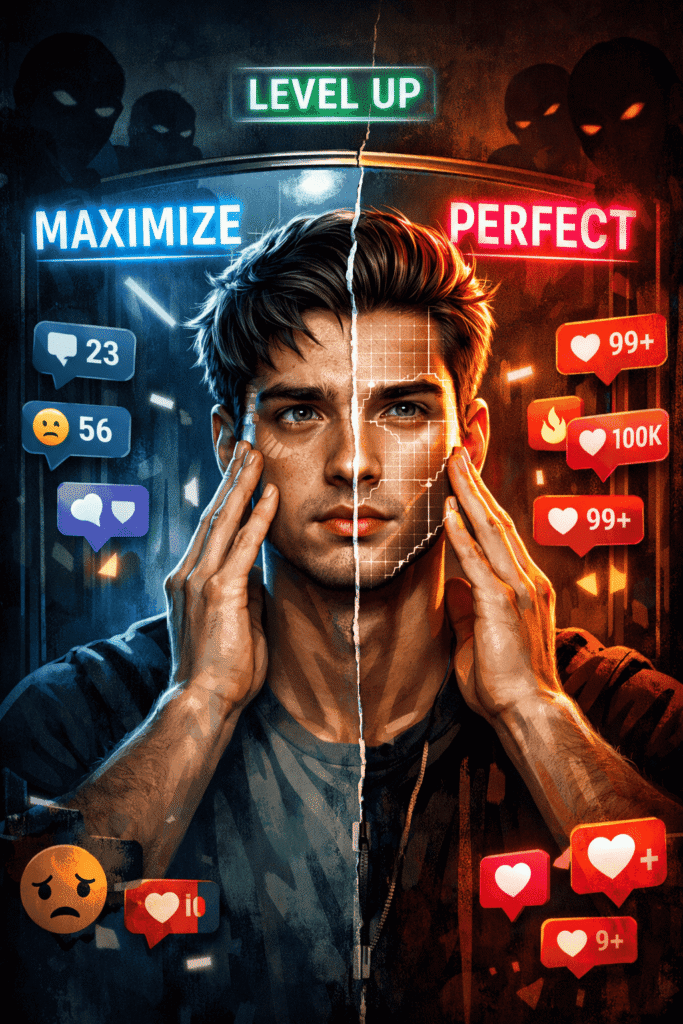
What is the definition of the term “Looksmaxxing”? What is the way that this trend promotes toxic beauty standards for young men
- “Looksmaxxing,” a popular social media-driven trend that encourages men to ad hoc “optimize” the appearance of their faces, has been growing in popularity.
- It’s akin to similar trends based on appearance, such as softmaxxing and hardmaxxing.
- Though often seen as self-improvement or improvement, experts warn that these tendencies can lead to body dysmorphia as well as anxiety eating disorders, even self-harm.
- Young men are particularly vulnerable due to various aspects, such as online messages about masculinity and the value of their work.
A trend that is growing on social media encourages young males to “maximize” their appearance.
The trend is focused on the “ideal” body and face. It’s akin to similar trends on social media such as softmaxxing or hardmaxxing. These trends encourage anything from rigorous grooming routines, to aesthetic procedures and extreme changes to the body.
While some say that they can empower however, experts in mental health warn that they could cause bodies dysmorphia anxiety, depression, and other harmful behaviours.
Jason Fierstein, MA, LPC, founder of Phoenix Men’s Counseling, said these trends are harmful and detrimental.
“Young males fall prey to the false perception of acceptance and what they think women expect to see from their partners,” the author told Healthline. “They are involved in ongoing battles to feel inadequate and dealing with the feeling of being inadequacy.”
He also described the trend of looksmaxxing as the result of a “social digitally-driven, body dysmorphic trend.”
“People tend to concentrate their energy in enhancing their physiques in order to feel less inferior or lack of confidence,” Fierstein said.
“Men are often stuck in a loop of attempting to “optimize” their appearance, however as mental health professionals We know that if you’re feeling unsatisfied or unworthy and unworthy, these are the issues to discuss with a trained therapy.”
What’s the distinctions between the looksmaxxing and softmaxxing and hardmaxxing styles?
Although the terms used differ however, all trends have one feature in common being the desire to continuously modify your appearance.
“Looksmaxxing is self-improvement that puts in overdrive. It’s redefining the masculine body as something that needs to be crafted,” Fierstein explained.
Softmaxxing can be described as subtle adjustments to appearance, which are typically accomplished by grooming and lifestyle changes Hardmaxxing is more drastic.
“It involves a number of serious ways to improve your appearance like nose surgeries, Botox, hair transplants and chin surgery. The main issue is that once you’ve opened the Pandora’s Box, it’s hard to shut the lid,” Fierstein noted.
Christine Ruberti-Bruning, MA, ATR-BC, CEDS, LPC, certified therapist and licensed food disorder expert, summarised her findings.
“There’s there nothing bad about wanting to appear nice, and taking care of your appearance can boost confidence and also be gender affirming. The main issue is that a look-enhancing lifestyle is driven by self-doubt and the desire to fit in with the crowd, which can be detrimental to your safety and health,” she pointed out.
“Hardmaxxing is, however, appears to be taking a dip into self-harm territory, particularly certain trends that are associated with it that include hitting the face with the Hammer.”
Why looksmaxxing is so sought-after by young males
What is it about looksmaxxing that seems to resonate with younger males in particular?
Fierstein stated that teenagers, especially young men are generally in a phase of their lives in which they are still trying to figure out who they are and a lot of them are looking for ways to present what they consider to be “the most appropriate masculine image.”
Fierstein believes that trends such as looksmaxxing may be connected with Incel-culture as well as the manosphere as well.
“It began a few years ago with male gurus such Jordan Peterson, Joe Rogan as well as those of the Tate brothers. These kinds of “masculine” influencers led men to the wrong path,” he said.
Ruberti-Bruning also shared a different view of possible factors that could be contributing to the issue.
“Mental health problems as well as lonely are also a major issue at the moment, making young men particularly susceptible,” she noted.
The line that separates healthy self-improvement practices and unhealthy ones
Knowing the difference between pride in your appearance and a narcissistic obsessiveness about how you look isn’t easy for many people.
“Self-improvement techniques can be detrimental when anxiety is the main driver or when the rituals you practice take up too much of your mental space that it’s impossible to be fully present in your personal life and relationships” Ruberti-Bruning explained.
There are many risks associated with these kinds of harmful actions.
” Eating disorders and self-harm behaviors are typically linked to body dysmorphia, depression, and anxiety,” Ruberti-Bruning said.
“Men are susceptible to feeling embarrassed about their body due to messages from society that tell them to be strong and fit. Some men may feel it may feel like an assault on their masculinity and self-esteem.”
Fierstein declared that, for those who want to make minor modifications to their body this could be a gateway to damaging obsessional, obsessive mental needs.
“It can spiral out of control and you might feel that you have to take action to make yourself feel better instead of feeling at ease in your own skin.”
In the end, he added that healthy self-improvement generally doesn’t appear like the type of self-care content that’s a hit through social platforms such as TikTok as well as Instagram.
“It’s about taking proper care of yourself from within,” he said.
Tips to practice self-acceptance
It’s not something that can be achieved in a flash However, there are a few ways to be healthy to start your journey.
First, Ruberti-Bruning argued that having complex emotions about your appearance and body is natural and normal.
She suggested “leaning towards” this and finding a way to express it.
“Creativity is a wonderful way to let your emotions out in a manner which can even be fun. Think about drawing, collaging, or even creating a book that will keep track of your experience,” she advised.
Although the use of social media can lead to unhealthy behavior and emotions There are ways to minimize the risk.
“Follow accounts that encourage gender equality and a healthy, masculine lifestyle. Follow people who don’t share the narrow definition of masculinity created in society.” Ruberti-Bruning advised.
Finally, you should take time out with your friends and family.
“It seems simple enough however, being connected to other people helps us to escape from our own minds. The communities we live in can aid us remain honest with ourselves,” Ruberti-Bruning said.