
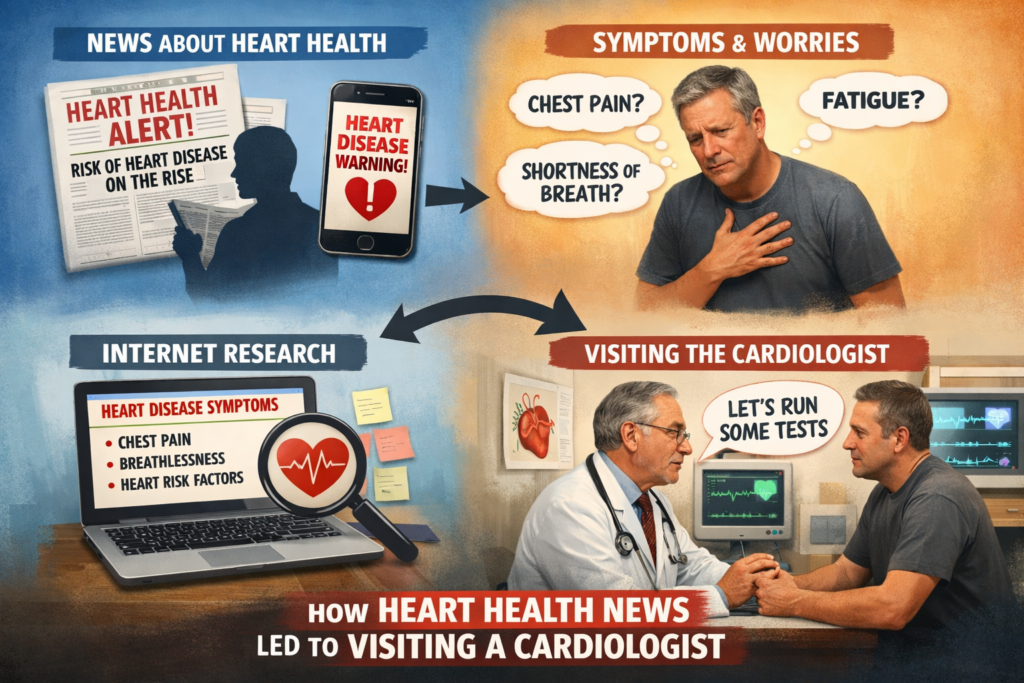
I’d spent the last couple of years pondering whether my the onset of heartburn and a change in gut health was just part of aging or an indicator that my diabetes, which I’ve had for a long time, had finally started to affect my heart.
This is the reason I decided to see a cardiologist my first visit at the age of 47 with no pre-existing heart condition.
However, despite no indication of heart disease and a perfect report of good health by my complete medical team I made the decision to move to move forward.
Being a sufferer of the type one diabetes since my childhood and I’m more at risk now that I’ve been for four decades living with this autoimmune disease. In addition, I have more frequent heartburn in recent years due to digestive health issues, and it could be unclear regarding what it might or may not be indicating for my heart health.
This adds to recent news that cardiovascular risk is higher in men who are in their mid-30s. This goes beyond conventional risk factors such as increased blood sugars (see the years in my teens as well as 20s in the 1990s and early 2000s).
There are headlines and health-related news articles about the risk of a cardiologist and it could appear like studies are changing frequently and indicate a different information point to incorporate into our daily lives. For someone who suffers from chronic illness I am often overwhelmed by all the informational briefs.
Here’s a extra kicker.
There’s good clinical advice for first-time visits to a cardiologist for people suffering from the type 2 form of diabetes. For those with already existing heart disease or attacks have a better idea regarding what is necessary.
However, people like me with a general health, but have suffered from chronic illness for the majority years? It’s not so great.
In spite of the lack of guidelines for heart screening for T1D studies suggests that the age of 45 is the ideal age to begin. This is what I did it, even if I was a few years later than that.
For every health news story that I’ve read about, it’s only one piece that makes up the data I rely on in my efforts to control diabetes. In this case I brought recent news stories and research to my health care team together with my own personal issues and signs.
This led me to choosing to consult with a cardiac surgeon for the first time.
I’m happy that I did, because I’ve learned the most up-to-date cardiovascular health news and the things I’ve learned since beginning this chapter on cardiology in my career in health.